
- Mar 25
Luxury of Cave Time: Why Visionaries Must Periodically Disappear
- Kate Graham
- 0 comments
There’s a cost to constant visibility.
To being available to so many.
Your mind adapts.
It gets faster.
More responsive.
Efficient.
Better at handling what’s in front of you.
But something deeper becomes harder to access.
Not gone.
Just… further away.
You can feel it when:
decisions don’t land,
ideas repeat themselves,
or clarity feels just out of reach.
And the heart remembers, most of all.
Tugging and pulling,
Wondering when it will be time to
truly listen.
You’re still showing up. Still responding. Still carrying what needs to be carried.
But something underneath it starts to thin out.
Some may call it a simple burnout issue.
It's also a calling to take what I affectionately refer to as 'cave time'. We exit the proverbial fire of socializing, celebrating, sharing knowledge, relating, conflict, interdependence, and we enter a 'cave'.
It is a true need to take time for reflection without an audience.
No momentum to maintain, burdens to carry.
It is a dangerous thing for a visionary to give constant accessibility and access. In fact, it seems it has been known for a long time that people need time away to gain perspective.
We do live in an era where visibility usually signals someone's relevance, their credibility. The more someone is 'out there' at the gatherings, the more we are made to believe they are 'together'. Founders and business owners are encouraged to narrate their thinking in real time, to share themselves more and more outwardly. Many leaders and business owners find themelves cycling through conversations that never fully pause.
For years, the most wise and powerful have taken their 'cave time'.
The ancient version of the 'combeback game' or 'revenge body'.
If they don't, this internal pressure accumulates quietly.
I've known it well.
High performers will rarely describe it as exhaustion, though. They'll usually describe it as responsibility, duty. They may describe it as feeling like there is momentum, or what they're going through is just a necessary evolution of our modern age. Which all seems true, in a sense.
No matter what, something subtler begins to thin out or feel stripped away on a soul level, though, and this is the true danger of avoiding the reducing of that internal pressure.
When external attention remains on you for too long, your mind and nervous system adapts (or, can maladapt). It sharpens for urgent response and begins to organize around immediacy and efficiency. It anticipates the next question before the previous one has settled, and reduces the ability to listen more deeply.
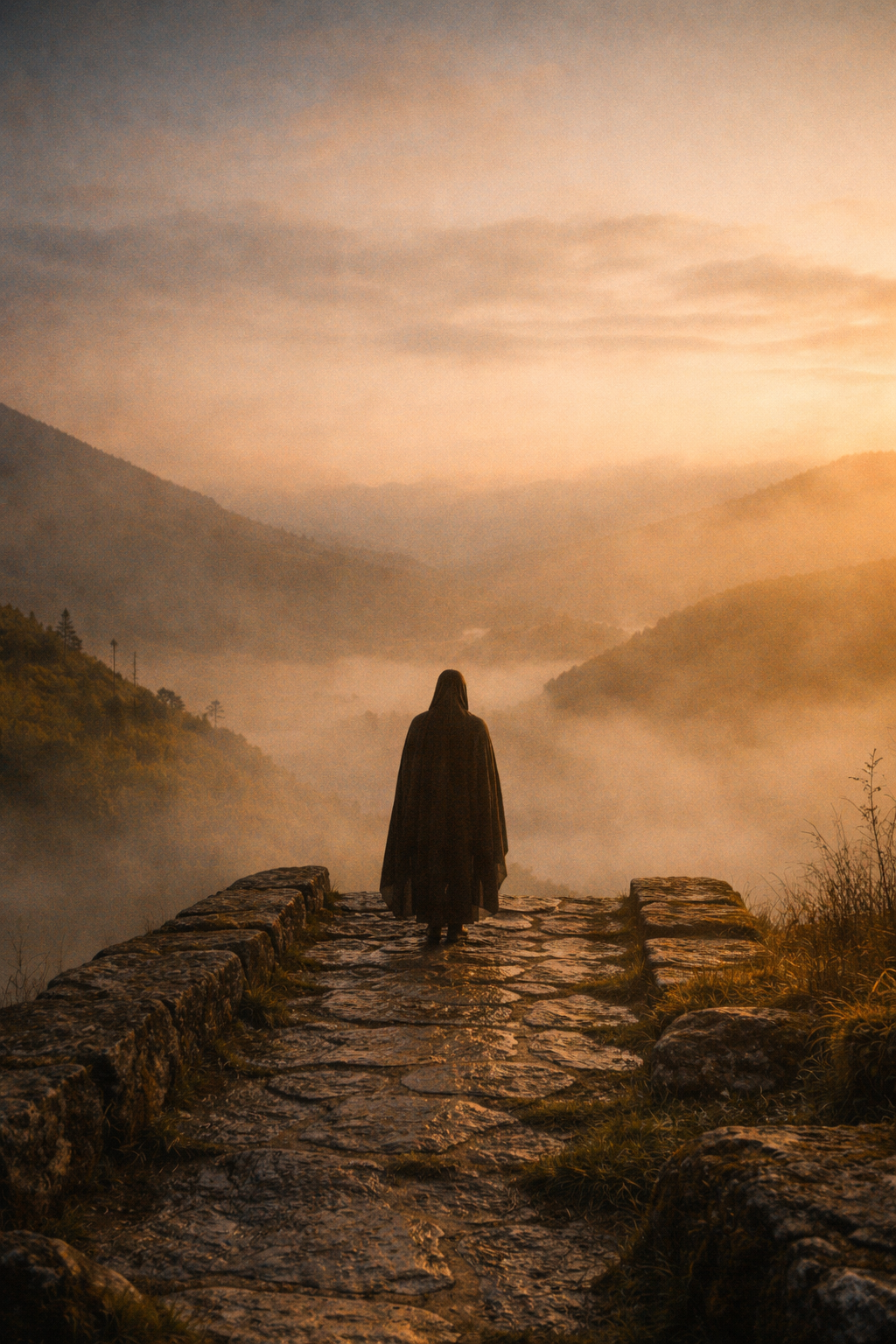
Enter the cave.
In the older lands, this was never unusual.
There were paths people walked when something in their life needed to be met differently.
Not marked in the way roads are marked now.
But known.
Pilgrimage was a source of guidance. To travel, and gain perspective.
It was about entering a different state.
To walk toward a well.
A chapel ruin.
An island only reachable at low tide.
To sit with something, long enough that it began to speak back.
There are stories of people leaving for forty days.
Or crossing water alone.
Or disappearing into the hills without needing to explain why.
No one called it healing.
No one needed to.
It was understood that there are times when a person must step out of the known world
in order to return to it properly and in a good way.
Some brought back songs.
Some brought back decisions for the benefit of the collective, and the heart.
Some returned quieter, but more certain, an inner fire stoked.
The land was part of it, too. A sacred guide and teacher.
You need an experience which holds a certain depth, long enough for what is real to come forward.
And that rhythm hasn’t disappeared.
It’s just been forgotten in how we live now.
A Personal Reflection
There was a period in Scotland when I first visited in 2018, and stepped away from public momentum or responsibilities that were burdening me. The landscape was vast and spectacular in its steadiness. Days passed without needing to respond to the life I used to know. Conversations were sparse. Time lengthened, I had epiphanies and unraveling, and I found myself more deeply on the other side.
Don't get me wrong, the first day or two felt restless. My mind searched for productivity, a win, some validation. For articulation. For something to report. Report to who, to where, why?
Then it softened. It was a cave time that was well needed, to heal after heartbreak.
Walks grew slower. Thoughts expanded. Decisions that had felt tangled began to untangle themselves without any force at all really.
Nothing super dramatic happened. I felt clear in my direction and the path ahead. Beautiful opportunities with strangers inviting me to their homes as I traveled began to unfold.
Cave time is the deliberate choice to separate oneself from society or expectations or others needs/responsibilities. It is more than that, which I will continue to talk about too, but for this conversation today:
It is a chosen withdrawal, and a descent into protected solitude.
The Historical Rhythm of Withdrawal
The pattern is older than our current culture.
Carl Jung built Bollingen Tower as a private refuge where he withdrew from academic life to think, write, and carve stone. His most enduring insights matured there.
Virginia Woolf articulated the necessity of uninterrupted space for serious intellectual work. A room of one’s own was a condition for depth.
Steve Jobs structured periods of walking and withdrawal during pivotal creative phases.
Serious thinkers have always protected periods of disappearance.
They understood the rhythm.
Withdrawal.
Descent.
Return.
Isolation and Structured Cave Time
Withdrawal without structure can drift.
Cave time requires intention. A clear entry. A clear duration. A conscious return.
Isolation disperses energy.
Structured solitude gathers it.
There is a difference between withdrawing to escape and withdrawing to refine.
When time away is framed intentionally, reflection deepens. Insight stabilizes. Decisions reorganize from a steadier place.
This rhythm is deliberate.
Identity Reorganization That Only Happens in Solitude
When no one is reflecting you back to yourself, performance softens.
Without audience, roles quiet.
Without constant response, deeper questions rise from within you.
Grief can surface. Fatigue reveals itself honestly. Desires and visions get clear without the pressure of optics.
Many leaders do not need more strategy. They need uninterrupted space long enough for truth to surface.
In sustained solitude, your very identity reorganizes itself. The self that was shaped by expectation loosens. A simpler core becomes accessible.
Clarity forms gradually. Direction refines itself. Energy returns without urgency.
The shift feels subtle at first.
Then it becomes undeniable.
Reflections
When was the last time your thinking was given enough space to fully unfold?
What decisions might shift if your nervous system were no longer responding to constant input or expectation or responsibility?
What is waiting beneath the surface of your current momentum?
Real cave time is structured withdrawal. A deliberate descent. Time long enough for the nervous system to settle, for outer roles to soften, for deeper clarity to emerge.
And sometimes, the most strategic move a leader can make is to allow themselves to be held in that uninterrupted depth.
There are seasons for visibility.
And there are seasons where something deeper needs to be met.
Cave time is not disappearance for the sake of it.
It’s a deliberate step out of the noise long enough to hear what is actually true.
Introducing the idea of cave time in celebration of opening up a new offering of private 1:1 Remembering Retreats this week. I love Aries season, always gives me this little boost of rocket fuel.
You can explore the Remembering Intensive here:
https://www.heartsfrontier.com/private-remembering-intensive